The Progress Principle: The Most Underrated Motivator There Is

By Ray Chooi · Founder of TaskGrower ·
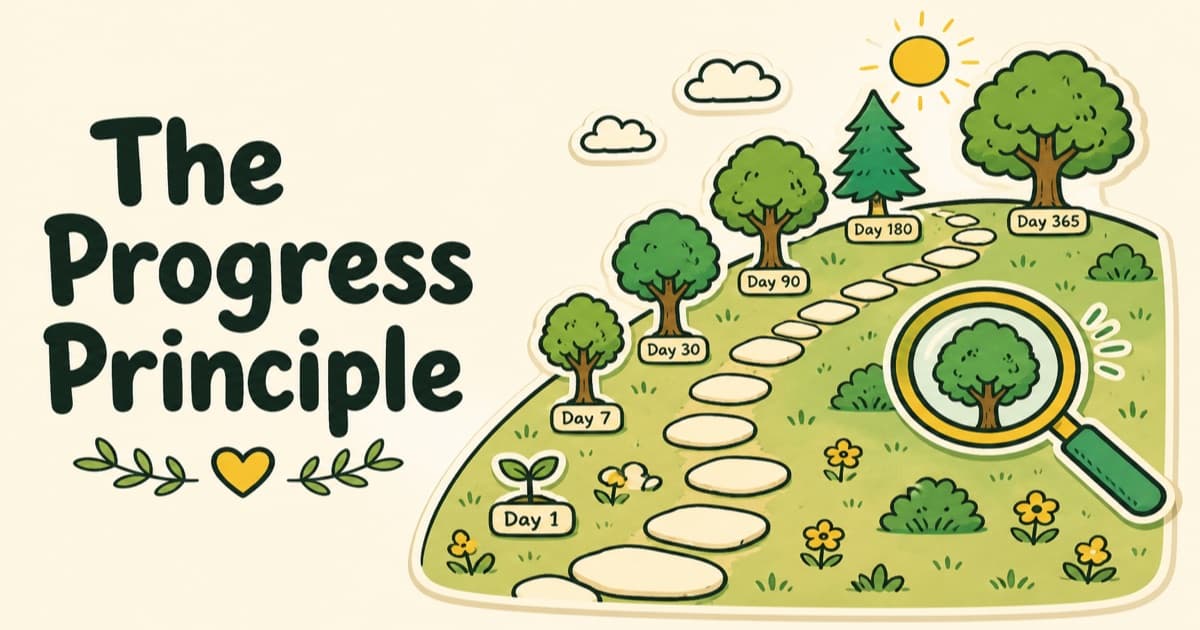
Ever finish a busy month and struggle to name what you actually did? The work happened. The hours were real. But the record in your head is mostly the annoyances. That gap has been studied. What fills it is the strongest work motivator ever measured.
Progress beats praise and pressure
Teresa Amabile ran a diary study at Harvard. Steven Kramer worked with her. They collected nearly 12,000 daily notes. From 238 professionals. They asked a simple question. What makes a good workday good?
Not recognition. Not incentives. Not pressure. Progress predicted motivation best. It also predicted creativity and mood. Progress in meaningful work. Even a small step. They called it the progress principle.
The flip side made the finding urgent. Setbacks hurt more than progress helps. And your memory makes that gap worse. Brains file complaints, near-misses, and unfinished work. Finished work quietly fades away. That is why a month of real effort can feel like nothing happened. And that feeling is usually wrong.
The practical takeaway is almost too simple. Motivation is not something you find. It is something you notice. People who could look back on their progress kept going. People who could not stalled. Even when they were making real progress.
How to make progress visible in any task system
- Keep the done list. Most systems delete or hide finished tasks. That is backwards. Done work is the fuel. Keep it where you can look back on it.
- Review on a schedule, not on a mood. Spend five minutes on the finished week. Every week. That pushes back on the brain's bias toward bad news with real evidence. Once a month, do the same at a bigger zoom.
- Count small wins as wins. The research is clear. The size of the step barely matters. Finish a tiny task on a hard day. That keeps you going.
- When stuck, look back before pushing forward. Feeling stuck is usually a visibility problem. Not a progress problem. Revisit a good day or a strong week before you decide anything about yourself.
This pairs well with the fresh start effect. The look back proves the system works. The new week gives you a clean page to run it on.
How TaskGrower bakes it in
Making progress visible is the whole point of TaskGrower. Every finished task grows a little scene for that day. A tree gaining branches. A moon filling out.
- Days become a gallery, not a graveyard. Finished work does not vanish into an archive. It becomes the day's tree. Kept forever.
- Zoom out to look back on the month you forgot. One gesture takes you from today to the week. Then the month. Then the year. Every day you grew, side by side. It is the diary study's fix, drawn as a landscape.
- Zoom in when you feel stuck. Revisit a single good day. It answers "nothing is working" better than you think.
The quest for this idea is called "Zoom Out, Zoom In". It unlocks once you have ten grown days to look back on. The first zoom-out lands the lesson better than any diary summary.