The IKEA Effect: Why We Overvalue What We Help Make

By Ray Chooi · Founder of TaskGrower ·
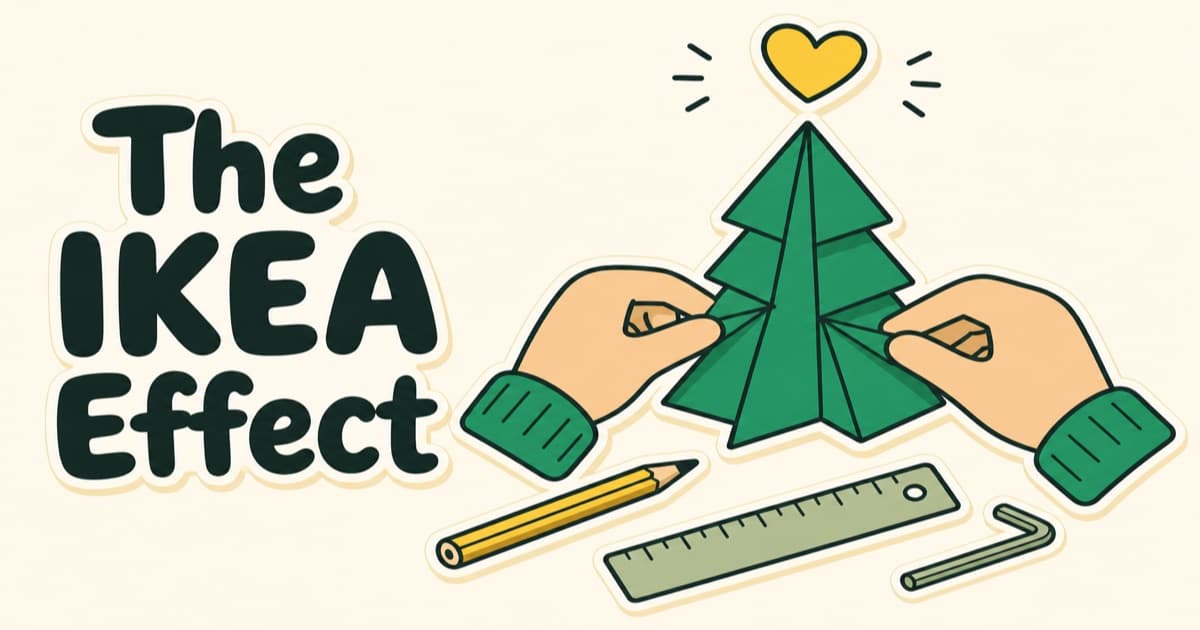
In 2011, researchers paid people to fold origami frogs, badly. Then they auctioned the frogs. The folders bid nearly five times more than strangers did. For their own lumpy creations. They bid about as much as experts' folds fetched. The folders were not deluded about quality. They were attached. The attachment came from the labour.
Labour leads to love
Michael Norton, Daniel Mochon, and Dan Ariely named the bias. They named it after the furniture that made it famous. The IKEA effect. Across experiments with flat-pack boxes, LEGO, and origami, the pattern held. Effort you put into making a thing raises the value you place on it. Even when the result is mediocre. Crucially, the effect needs completion. Half-built items got no bonus love. Finishing is part of the spell.
The bias has a bad name in business. It makes founders overvalue their own ideas. But it also has a useful side. Anything you need to stay attached to for months gets stickier. The more of it you built yourself, the stickier it gets. A routine. A workspace. A habit system. IKEA understood this long before the paper. The effort is not a cost of the furniture. It is an ingredient.
How to use the IKEA effect in any task system
- Build your system, don't adopt one. Templates are starting points. Rename the categories. Change the ritual. Make the weekly review yours. The half hour of setup is not overhead. It is the down payment that keeps you loyal in week three.
- Make a tree (or a mark) visible in it. Handwritten journals outlast printed planners for a reason. A system that carries your marks, your colours, your drawings is harder to abandon. Harder than one that looks like everyone else's.
- Finish the builds you start. The research is clear. The effect only pays out on finished work. One finished small customisation beats three abandoned grand redesigns.
- Let others look at it. Made things want an audience. Sharing what you built, even quietly, turns ownership into pride. Pride shows up on the days motivation does not.
How TaskGrower bakes it in
In TaskGrower, finishing tasks grows a scene for the day. You choose what grows. A tree. The moon. A skyline. The IKEA effect enters with the growth studio. There you can draw your own.
- Draw a tree and it becomes what your tasks feed. Every finished task adds to your artwork. A tree you drew means more than a tree you picked. That is the origami experiment, running quietly in your task list.
- Your effort stays visible. Days grown with your own design fill your gallery. The attachment compounds with the progress principle. It is not just progress. It is progress on a tree you made.
- Others can grow it too. Share a design to the Community. Someone else's month of growing might happen inside your artwork. The origami auction, but wholesome.
The quest is called "Grow Your Own Way". Draw a creation. Then grow it once. Most people who do it never quite go back to the defaults.