How to Build Habits That Stick: Systems Beat Goals

By Ray Chooi · Founder of TaskGrower ·
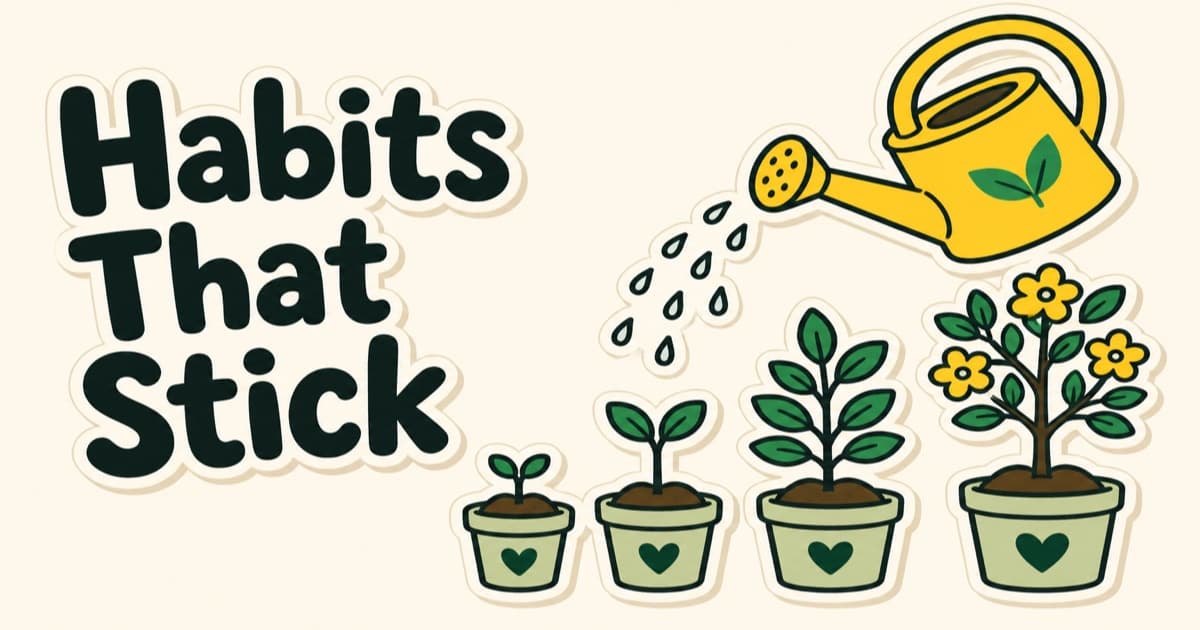
Every January proves the same thing. Goals are cheap. The people still going in October are not the ones with better goals. They are the ones who stopped needing willpower at all.
Fall to your systems
"You do not rise to the level of your goals. You fall to the level of your systems." From Atomic Habits by James Clear
James Clear's Atomic Habits made two ideas famous. The first is the quote above. On a bad week, your goal does nothing for you. Your system catches you. That is the default shape of your days. The second is the compounding argument. Get 1% better each day. By year's end the multiplication works out to roughly 37 times better. Get 1% worse and you decay to nearly zero. Small daily direction beats occasional intensity. Every time. Because the gains stack.
Underneath both ideas is a mechanical fact about brains. Repetition moves behaviour from the expensive part of the mind to the cheap part. The first twenty gym sessions cost willpower. Somewhere after that, skipping starts to feel stranger than going. Repeat something enough and it stops costing willpower at all. That is the entire prize.
How to build habits in any task system
- Shrink it until it is unrefusable. The habit that sticks is the two-minute version. One pull-up. One paragraph. One glass of water. Scale comes later. Automaticity comes first.
- Give it a schedule, not a mood. "Read more" is a goal. "Read after lunch, daily" is a system. Attach the habit to a time or an existing routine. Showing up becomes a default. Not a decision.
- Track the showing up. A simple check per day is enough. What gets measured gets repeated. A visible run of checks is its own reward.
- Plan for the miss. You will miss a day. The rule that saves the habit is "never miss twice". The mindset that saves it is forgiveness, not shame. We wrote a whole piece on what to do when you break a streak.
How TaskGrower bakes it in
TaskGrower takes a slightly contrarian position. Habits are not a separate feature with their own tab. A habit is just a task that repeats.
- Repeat tasks live in the same daily list as everything else. You choose a target and duration. One list. One plan. No second app to maintain.
- Every check-in grows the day. Ticking a habit grows that day's scene. It sits alongside your other tasks. The 1% actions get the same visible credit as the big ones.
- Misses cost nothing extra. No chain snaps. No streak counter resets to zero in red. The system is built to be fallen back on. That is what systems are for.
The quest for this method is called "Creature of Habit". Make a task repeat. Then check it in ten times. Ten is about where the repetition starts doing the work for you.